The end of the prompt-engineer era
Two years ago, "prompt engineer" was a role that paid a premium and a noun that appeared on every AI team's org chart. By 2026 it is neither. Not because prompting stopped mattering – it matters more than ever – but because it stopped being a craft skill individual humans hoard and became an engineering discipline that teams practice together.
The useful framing in 2026 is "system prompting": the design, versioning, testing, and governance of the system-level instructions that shape every response a production AI feature produces. The system prompt is now the contract between the organisation's expectations and the model's behaviour. It deserves the same engineering rigour as an API specification or a database schema – and the teams that treat it that way are the ones shipping reliable AI.
The framework that follows walks through what a production-grade system prompt actually looks like, the version-control discipline that distinguishes maintainable prompts from accumulated scar tissue, the four-question review gate on every change, the line between what belongs in prompts and what belongs in code, how to handle the cross-model portability problem, the governance cadence that prevents drift, and the operational considerations the architecture decks miss.
What a production-grade system prompt looks like
Most of the ad-hoc system prompts we review during engagements share the same flaws: they are long, unstructured, mix instruction with examples in the same paragraph, reference tools that no longer exist in the deployment, contain rules that contradict each other, and nobody can explain when each line was added or why.
A production-grade system prompt has clear structure that makes every section's purpose explicit:
- Role definition and scope boundaries at the top. What the assistant is, who it serves, what domain it operates in, what it is explicitly not. The first paragraph anchors everything below.
- A short, explicit behavioural rubric. What the assistant does, what it declines to do, the tone, the style, the verbosity defaults. Each line in the rubric is independently verifiable.
- Tool-use guidance. When to call which tool, when to escalate, how to handle tool failures, how to interpret tool outputs that look inconsistent. The tool-use section is where most production reliability issues originate, and where the most prompt-engineering effort pays back.
- A hard list of prohibited behaviours. The cases where the model must refuse, must escalate to human review, must not invent content, must not make external commitments on behalf of the organisation. These are typically the regulator-facing constraints.
- Output-format contracts. JSON schemas, markdown conventions, citation rules, response length expectations. The format contract is what makes downstream code robust to model variability.
- A short set of high-signal examples. Three to seven worked examples covering the hardest cases (the ambiguous refusal, the multi-tool task, the format-sensitive output). Examples beat instructions on the cases the team most cares about.
Why every line has to earn its keep
Every section of a production system prompt has a reason for being there, and any line that does not earn its keep is a source of future regression. Long prompts that accumulate paragraphs from past incidents look thorough on first read and produce worse outputs than tighter prompts because the model is asked to weigh contradictory or stale guidance against the user's actual request.
The operational pattern that distinguishes maintainable prompts from accumulated scar tissue is brutal pruning. When a new constraint is added, the corresponding old constraint that it supersedes is removed in the same change. When a behavioural pattern is generalised, the specific examples it replaced are deleted. When a tool is deprecated, every reference to it is purged. The prompt that emerges from a year of disciplined pruning is consistently shorter and higher-performing than the prompt that emerges from a year of additive iteration.
Treat system prompts as versioned engineering artefacts
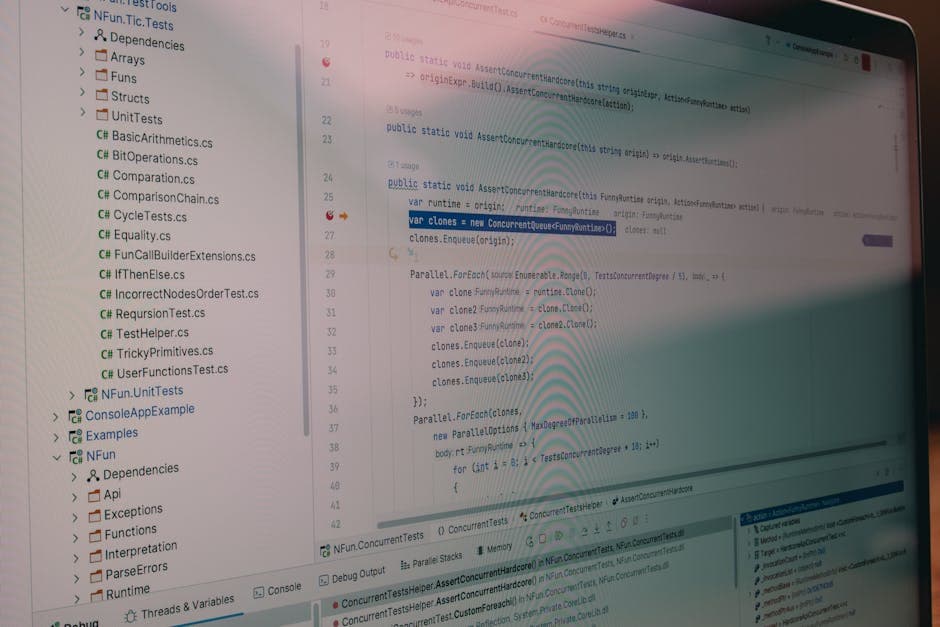
The single largest quality win most teams get from maturing their prompt practice is adopting version control for system prompts. Not prompt management via a SaaS add-on – proper version control, in the same repository as the code that deploys it.
- Store the prompt in the same repo as the code that loads it. The prompt and the code that depends on it should not diverge silently.
- Diff every prompt change in a pull request. The team reviews prompt changes with the same rigour as code changes. A subtle three-word change can shift production behaviour materially; the diff is the artefact that surfaces it.
- Require a named reviewer before the prompt change merges. The review gate catches the changes that look harmless and have downstream regression effects.
- Tag releases against specific prompt versions. The deployed model behaviour is reproducible from the tagged commit; debugging production issues works backwards from "what prompt was live when the incident happened".
- Roll back the prompt when a regression surfaces. The rollback path is a feature, not an exception. Teams without rollback discipline patch forward and accumulate regressions; teams with it reset cleanly to the last known good state.
The unexpected second-order benefit
Teams that adopt version control for prompts find an unexpected second-order benefit: prompts stop accumulating scar tissue. Without version control, every past failure mode adds a new paragraph that nobody is willing to delete because nobody remembers why it was added. With version control, there is a clear lineage and a natural checkpoint to ask "is this line still needed?".
The working prompts we see in mature teams in 2026 get shorter, not longer, once the version-control discipline lands. The pattern is consistent across enterprise deployments: 2024-vintage prompts of 8,000 tokens get compressed to 2,000-token prompts that outperform the originals on the same evaluation suite, because the disciplined deletion of irrelevant or stale guidance removes more noise than the added complexity ever provided.
The review gates that matter
A review gate on system-prompt changes should answer four specific questions before any change ships to production:
- Does the full regression evaluation still pass? A prompt change that moves one metric and quietly regresses another is exactly the failure mode evaluations exist to catch. No prompt change ships without a regression-suite green check.
- Has the change been diffed against current tool availability and schemas? A prompt that references a deprecated tool or a changed schema will produce confident failures. The tool-availability check is a routine prompt-change gate.
- Is the change specific to one failure mode, or does it accrete? "We added a sentence to fix the weekend-hours issue" is fine; "we added five sentences because we are not sure which one fixes it" is a signal to stop, diagnose the root cause, and add only the line that actually addresses it.
- Does the change respect the instruction hierarchy? Modern models distinguish between system, developer, and user messages with meaningful precedence and different override behaviour. Putting safety rules in the user-visible layer is a common and costly anti-pattern that the review gate catches before deployment.
What belongs in prompts vs what belongs in code
One of the clearest signs of a maturing AI team is a crisp line between prompt responsibilities and code responsibilities. The boundary is what determines whether the system fails gracefully or accumulates fragility in the wrong layer.
Prompts should instruct the model on judgement-heavy behaviour: tone, handling ambiguity, choosing between tools, interpreting context, deciding what level of detail to provide. Code should handle deterministic behaviour: input validation, rate limits, schema enforcement, permission checks, audit logging, retry logic, and any quality-gate that can be expressed as a hard rule.
The rule of thumb that produces durable architectures: if a test can be written that decides "correct" or "incorrect" mechanically, the behaviour belongs in code. If correctness depends on tone, context, or interpretation, the behaviour belongs in the prompt – and the prompt needs an LLM-as-judge evaluator to validate it against a labelled regression set.
Anti-patterns to avoid in the prompt-vs-code split
Three recurring anti-patterns produce fragile production systems:
- Prompts encroaching on deterministic territory. "Always include the order ID in the response" or "format dates as YYYY-MM-DD" belongs in the output schema enforced by code, not in the prompt. When the model fails to comply, the application breaks downstream. Code enforcement is the structural fix.
- Code encroaching on judgement territory. "If the message contains X, override the model's refusal" produces brittle systems that fail in adversarial cases the if-statement did not anticipate. The model's judgement is the right tool for context-sensitive decisions; tightening the prompt is the right intervention when the judgement is wrong.
- Duplicating the same rule in both layers. Stating "respond in JSON" in the prompt and also enforcing JSON schema in code is fine. Stating "never reveal user A's data to user B" in the prompt without enforcing it in the retrieval layer is dangerous – the prompt is one prompt-injection away from being overridden, and the only durable enforcement is in the retrieval layer's permission check.
Portability across models
Prompts do not port cleanly between model families. A system prompt tuned for one frontier model often underperforms on another in specific ways: handling of refusals, interpretation of tool-use guidance, response-length defaults, verbosity under uncertainty, treatment of conflicting instructions. Teams that assume "prompts are portable" lose two weeks of evaluation and tuning every model migration.
A more durable discipline: maintain a single canonical system prompt in structured form (role, rubric, tools, examples, format contract), plus model-specific adapters that adjust phrasing, section order, and emphasis for each target model. Evaluate the adapted prompt against the same regression set the canonical version is evaluated against. When the team swaps models, the adapter changes; the canonical contract does not.
The portability discipline pays back twice. First, it makes model migration a tractable engineering task rather than a research project. Second, it forces the canonical prompt to be cleanly structured – sections separable enough to be re-emphasised per model – which itself produces a more maintainable prompt regardless of the migration story.
Owners, cadence, and governance
The boring piece that matters more than any individual technique: system prompts need a named owner. In mature teams in 2026, that owner is not a "prompt engineer" – it is a senior engineer or tech lead on the product team that owns the AI feature, with a secondary reviewer from safety, applied research, or compliance depending on the deployment's risk profile.
The named owner runs a monthly prompt-review cadence: walk the current production prompt line by line, audit every paragraph against its original justification in the git history, delete anything orphaned by changes elsewhere in the system, verify the prompt still aligns with the current evaluation results, and identify any drift between what the prompt says and what the production model actually does. The review is typically a 45-minute meeting that consistently pays for itself in the regression it prevents.
The teams that skip the governance cadence drift, and the drift shows up in the failure-mode distribution long before it shows up in headline metrics. Teams operating without named ownership of the system prompt routinely discover, in incident post-mortems, that "nobody knows when that paragraph was added or why" – which is the signal that the asset has accumulated technical debt that the next release will compound.
Regulatory dimensions of system prompting in 2026
System prompts have entered the regulatory perimeter through several frameworks that matured through 2024–2026. The implications for governance are concrete.
- EU AI Act transparency provisions (Articles 13 and 50) apply to the user-visible behaviour the system prompt produces. The prompt itself is part of the technical documentation a high-risk-AI deployment maintains for audit.
- NIST AI Risk Management Framework treats system prompts as part of the "AI system map" that has to be documented, versioned, and reviewed alongside the model and the data.
- OWASP LLM Top 10 specifically calls out prompt-injection vulnerability (LLM01), which is materially mitigated by clear instruction hierarchy and prompt structure rather than by ad-hoc string manipulation.
- For automated decision-making under APAC personal-data-protection regimes (PDPA Singapore, PIPA Korea, Vietnam Decree 13), the system prompt is part of the auditable decision logic when the model output affects users.
Operational considerations the architecture decks miss
Six operational dimensions that distinguish a production-ready system-prompting practice from a research-grade one:
- Prompt-level metrics in observability. Per-prompt-version evaluation scores, per-prompt-version production failure rates, per-prompt-version cost and latency distributions. Without per-version metrics, the team cannot tell which prompt change caused which regression.
- A/B comparison infrastructure for prompt rollouts. New prompts ship behind a feature flag with a small traffic sample, measured against the production baseline, and rolled out gradually as quality metrics confirm the improvement.
- Prompt rollback as a release-management primitive. The team can revert to any previous prompt version within minutes when a production incident traces back to a prompt change.
- Cross-language prompt strategy for multilingual deployments. The prompt has to work in every supported language; per-language prompt variants or carefully crafted multilingual canonical prompts are the two viable options.
- Privilege boundaries between system and user prompts. System-level instructions are explicit, immutable from user input, and validated against the model's instruction-hierarchy behaviour.
- Documentation of intentional ambiguity. Some prompts are deliberately under-specified to let the model exercise judgement. Those intentional gaps are documented so future maintainers do not "fix" them by adding constraints that close off the desired behaviour.
Frequently asked questions
Common questions raised by AI teams maturing their prompt-engineering practice:
- Should we still hire prompt engineers in 2026? No, not as a distinct role. The work belongs to senior engineers or tech leads on the product team, with periodic input from safety and applied research. The discipline is now plural and embedded, not a specialised job title.
- How long should a production system prompt be? As short as the deployment's behaviour requirements allow. Most production prompts in 2026 sit in the 1,000–3,000 token range; prompts above 5,000 tokens are usually accumulating scar tissue that disciplined pruning would compress.
- How often should the prompt be reviewed? Monthly review cadence for active products, quarterly for stable ones, on-demand after any production incident. The review is a 45-minute meeting that consistently catches regressions before they ship.
- Should I keep prompts in a SaaS prompt-management tool or in source control? Source control. The SaaS tools have a place for analytics and A/B comparison, but the source-of-truth lives in git alongside the code that loads it.
- How do I evaluate a system prompt for production readiness? Run it against the regression evaluation suite, inspect per-failure-mode distribution, check that the instruction hierarchy is respected (safety rules in system layer, not user layer), verify portability across at least two model families, and confirm the prompt is owned by a named engineer with a documented review cadence.