Why egocentric data requires specialist vendors
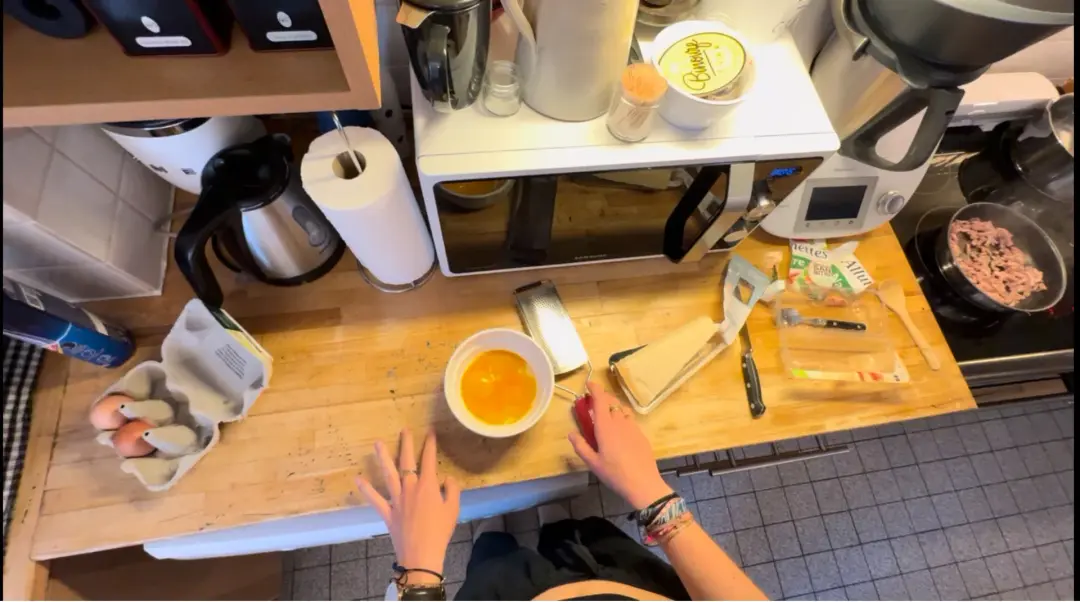
Egocentric video data collection - first-person, POV, and wearable camera footage - is the primary training data format for embodied AI, humanoid robot manipulation, and AR/VR scene understanding systems. As these applications have moved from research into enterprise production programs, the demand for managed egocentric collection programs has grown significantly.
The vendor market has not scaled proportionally. Most data services companies that claim egocentric video capability are annotation vendors who have bolted a collection offering onto their annotation stack. The distinction matters: annotation vendors can label footage you deliver to them, but they cannot design and operate the capture programs that produce it. Egocentric collection requires hardware expertise, participant recruitment infrastructure, scenario design capability, and QA workflows specific to first-person footage - none of which transfers from annotation operations.
The practical result is that the shortlist of companies who can actually execute a production-scale egocentric video collection program is short. This guide identifies the genuine options and gives you the evaluation framework to distinguish them from vendors overstating their capability.
What to evaluate in an egocentric video collection vendor
Five capability dimensions separate vendors who can run egocentric programs from those who cannot. Hardware capability is the foundation: does the vendor own and operate head-mounted rigs, wearable cameras, GoPro-based systems, and smart glasses setups? Have they calibrated and operated these rigs across extended programs, or do they contract hardware to local partners without operational knowledge?
Participant recruitment is the second dimension. Egocentric video quality depends heavily on participants - their demographic diversity, domain expertise for specialized tasks, and ability to follow complex scenario instructions. Crowd platforms cannot reliably deliver this; curated participant pools matched to program requirements are a managed program capability.
Scenario design is the third. A vendor who can take your task description and produce a written capture protocol - covering hardware configuration, scenario scripts, environmental specifications, and failure-mode handling - has the domain knowledge to design a program that covers the distribution your model needs.
- Hardware: operates rigs directly vs. contracts to local partners
- Participant pools: curated recruitment vs. open crowd self-selection
- Scenario design: written capture protocol delivered before recording
- QA: domain-trained human review of temporal consistency and task completion
- Sensor sync: measured sync error for multi-modal programs (RGB, depth, IMU)
- Delivery format: HDF5, ROS2 bag, LeRobot, custom schemas - not just raw video
Meta / FAIR - the Ego4D benchmark standard
Meta's FAIR lab set the benchmark for egocentric video data collection quality with the Ego4D dataset - 3,600 hours of daily-life first-person video collected across 9 countries with 931 participants. Ego4D is not a vendor; it is the academic program that established what rigorous managed egocentric collection looks like at scale.
Understanding Ego4D is useful because it defines the standard that enterprise programs should aim to approach. The collection protocol, participant diversity requirements, consent management across jurisdictions, and multi-stage QA process that produced Ego4D are the model for what a production-grade egocentric program requires. No commercial vendor fully replicates a university consortium program of that scale, but the best ones operationalize the same principles.
Scale AI - annotation scale, developing collection capability
Scale AI's managed data programs operate at significant volume and cover video labeling across automotive, robotics, and foundation model training. Their annotation quality infrastructure is mature, and for teams who need egocentric footage labeled after collection, Scale is worth a serious evaluation.
For managed egocentric collection programs - where the vendor designs and operates the capture program rather than labeling footage delivered to them - Scale's positioning is developing. Their primary strength is annotation at enterprise volume, and teams whose primary gap is labeling existing egocentric footage will find Scale more relevant than teams whose gap is collection program design.
iMerit - annotation-first with growing egocentric capability
iMerit has published technical content and case studies specifically on egocentric video annotation and has explicit positioning in the embodied AI data space. Their annotation QA workflows are documented and their domain expertise in computer vision is genuine.
iMerit is an annotation vendor expanding into collection. Their published work on egocentric annotation - action segmentation, hand-object interaction labeling, gaze estimation datasets - reflects real capability. Their collection program experience is growing; teams evaluating iMerit should ask specifically about collection programs they have run with egocentric hardware (not just footage delivered to them for annotation) to calibrate the capability gap.
Appen - scale with crowd delivery limitations
Appen brings contributor network scale across more than 170 countries and genuine experience in consent management and data provenance for video programs. For general egocentric video programs that do not require specialized hardware or tight scenario scripting, their contributor network provides reach that managed vendors cannot match.
The limitation is delivery model. Appen operates primarily through crowd-based contributor recruitment, which introduces variability in hardware configuration, scenario compliance, and recording quality that managed programs control at the source. For egocentric programs requiring domain-specific participants, custom hardware rigs, or coordinated multi-session recording, crowd delivery creates coverage gaps that managed programs do not.
DataX Power - APAC-native egocentric programs for robotics and embodied AI
DataX Power operates managed egocentric video data collection programs from Vietnam, with participant networks across Vietnam, Thailand, Singapore, and Malaysia. Programs cover head-mounted and wearable camera capture, multi-sensor fusion, teleoperation recording, and scenario-scripted manipulation demonstrations - the primary egocentric formats for robot and embodied AI training data.
The program model is full managed ownership: capture protocol design, participant recruitment matched to task requirements, hardware operation, scenario execution, multi-stage QA by robotics-trained engineers, and delivery to your required schema. Pilot programs run at 50-100 hours from spec sign-off, typically within two weeks. Production programs scale without re-procurement.
For enterprise teams whose robots deploy in APAC environments - warehouse, manufacturing, service contexts in Vietnam, Thailand, Singapore, or Malaysia - DataX Power provides collection in deployment-matched environments at 30-50% lower per-hour cost than equivalent US or EU managed programs.
DataX Power runs managed egocentric video data collection programs for enterprise robotics and embodied AI teams. Contact us to discuss your program requirements.
Learn about DataX Power egocentric video data collectionHow to run the vendor evaluation
Evaluate egocentric video collection vendors by requiring them to describe their last three collection programs in operational detail. Not marketing summaries - actual hardware configuration, participant recruitment approach, QA workflow for temporal consistency, and delivery format. Vendors with genuine collection experience can describe this with specificity. Vendors who are overstating capability default to annotation case studies rather than collection program examples.
Request a sample dataset from a comparable previous egocentric program. Legitimate vendors with production egocentric experience can provide anonymized samples. Review the sample for coverage consistency, sensor sync quality (if multi-modal), metadata completeness, and scenario diversity. A dataset that covers only one environment, one participant demographic, or one lighting condition is not from a well-designed program.
Run a 50-100 hour paid pilot at production-equivalent standards before committing to production volume. The pilot must use your required hardware configuration and QA standards - not a simplified proxy.