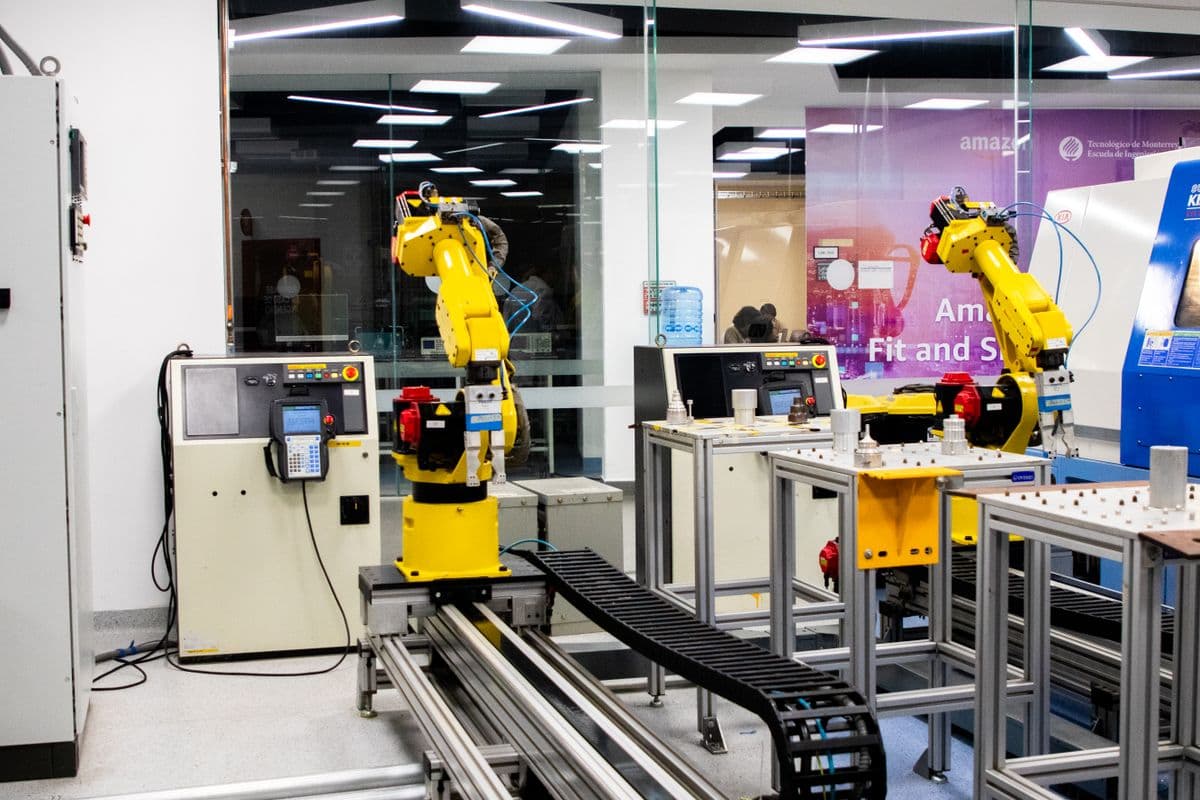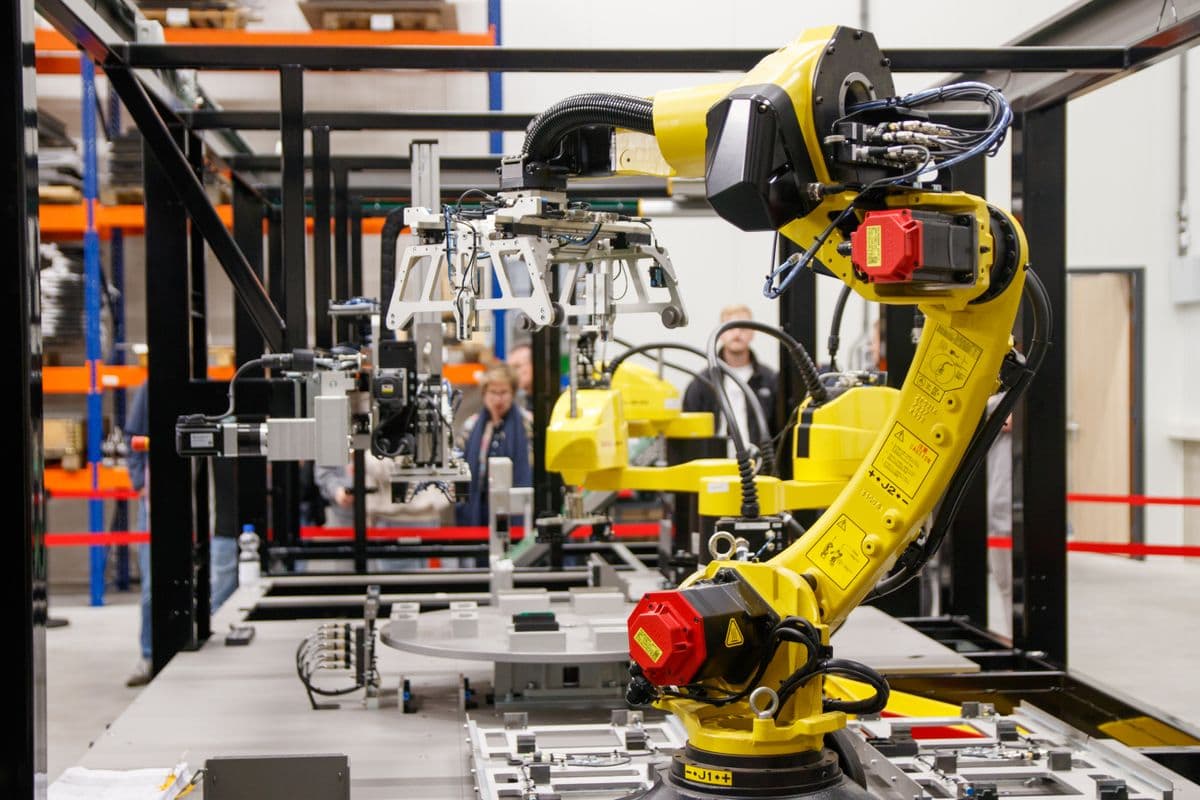
Why manufacturing digitization stalls at the pilot stage
Most enterprise manufacturers in APAC have run at least one Industry 4.0 pilot. Many have run several. The pattern that characterizes the failed ones is not technical failure - it is failure to connect the pilot to a production-grade data infrastructure that can sustain AI operations beyond the controlled conditions of a proof of concept.
A sensor network that generates useful insights during a 12-week pilot stops generating insight at scale when no one has built the data pipelines, labeling workflows, and model retraining cadences required to keep the AI systems calibrated against actual production variability. The AI layer is only as durable as the data infrastructure beneath it.
Manufacturers that have crossed from pilot to operational AI share a specific capability: they treat the data pipeline as the primary investment and the AI model as the dependent artifact. That inversion - data infrastructure first, AI models second - is what separates the factories that have materially changed their cost and quality baselines from those still cycling through pilots.
This guide covers the five AI domains where manufacturers are achieving measurable operational impact, the data infrastructure each requires, and the implementation sequence that scales from pilot to production.
1. Computer vision for automated quality inspection
Visual defect detection is the highest-penetration AI application in manufacturing today. On high-speed production lines where human inspectors miss defects at error rates of 10-20% due to fatigue and attention limits, camera-based AI systems operating at line speed achieve defect detection rates above 99% for well-defined defect classes - and unlike human inspectors, performance does not degrade on the third shift.
The infrastructure requirements are precise: high-resolution cameras with consistent lighting, a data pipeline that captures and labels defect images at production volume, and a model retraining loop that keeps the defect classifier current as product specifications and materials change. The model is not the hard part - labeling the edge cases that appear after go-live is.
- High-speed line inspection at camera frame rates
- -Industrial cameras operating at 60-200 fps classify defects without slowing the production line
- -Multi-angle setups catch defects invisible from a single viewpoint - critical for 3D components
- -Real-time alerts trigger automatic line stops or divert products to rework queues without human intervention
- Defect taxonomy and annotation discipline determine system accuracy
- -AI accuracy above 95% requires a labeled dataset with at least 500-1000 examples per defect class
- -Rare defect classes require active learning loops - the system surfaces uncertain predictions for human review and adds confirmed examples to the training set
- -Monthly retraining cycles keep models calibrated as suppliers, materials, and process conditions change
- Return on investment is measurable within one quarter
- -Reduction in escaped defects reaching customers - typically 60-80% reduction from human-inspection baselines
- -Labor redeployment from inspection to value-add tasks - one automated inspection station replaces 2-4 inspection headcount per shift
- -Rework cost reduction through earlier detection - defects caught at the point of production cost a fraction of defects caught at end-of-line or after shipment
2. Predictive maintenance and equipment health monitoring
Unplanned equipment downtime costs manufacturers an average of $50,000 to $250,000 per hour in lost production, depending on the production type and downstream impact. Predictive maintenance using AI-analyzed sensor data reduces unplanned downtime by 30-50% in well-deployed installations - not by predicting failure with perfect accuracy, but by shifting the maintenance posture from reactive (fix when broken) to condition-based (intervene when the data indicates impending failure).
The core technical pattern is a streaming analytics pipeline that ingests vibration, temperature, current, and acoustic sensor data from critical equipment, runs anomaly detection against learned baseline behavior, and generates early warnings days or weeks before the anomaly crosses into failure territory.
- Sensor data requirements for production-grade predictive maintenance
- -Vibration sensors on rotating equipment (motors, pumps, compressors, spindles) are the highest-signal data source for early fault detection
- -Temperature and current draw supplement vibration data for electrical equipment and furnaces
- -Acoustic emission sensors capture high-frequency signals from cutting tool wear and bearing degradation that vibration sensors miss
- -Minimum 6 months of historical sensor data plus documented failure events is required to train anomaly detection models with acceptable false-positive rates
- AI model architecture for multi-equipment fleets
- -Equipment-specific models outperform generic models - each machine type has distinct normal operating signatures
- -Anomaly detection approaches (autoencoders, isolation forests) work better than supervised classifiers when labeled failure data is limited
- -Digital twin integration allows sensor-based predictions to be validated against process simulation, reducing false-positive maintenance alerts
- Integration with CMMS and MES systems is the operational delivery mechanism
- -Predictive alerts have no operational value without integration into the maintenance scheduling system (CMMS) and production planning
- -Alert fatigue - too many warnings that do not result in failures - is the primary adoption killer; threshold tuning based on the first 3-6 months of production data is required
- -Maintenance teams need explainable predictions - "vibration on Bearing 3A increased 40% over baseline, consistent with early outer-race wear" converts to action; "anomaly score 0.82" does not
3. Process optimization and AI-driven production scheduling
Manufacturing processes involve dozens of interdependent variables - machine settings, material properties, environmental conditions, shift patterns - that interact in ways too complex for manual optimization. AI-driven process optimization uses historical production data to learn the parameter combinations that maximize yield, throughput, or quality for a given target, and then recommends or automatically adjusts parameters in real time as production conditions change.
The applications range from CNC parameter tuning (cutting speed, feed rate, depth of cut) to injection molding cycle optimization to process temperature control in chemical and pharmaceutical manufacturing. In each case, the AI system outperforms fixed parameter sets by adapting to the actual state of the production environment rather than running a static recipe.
- AI-powered CNC and machining optimization
- -Tool wear prediction models adjust cutting parameters in real time to maintain surface finish quality as tools degrade - extending tool life by 20-40% and reducing scrap from out-of-spec cuts
- -Process fingerprinting learns the parameter combinations that produce consistent quality across shift changes, material lot variations, and machine-to-machine differences
- -Integration with CAM software allows AI-recommended parameters to feed directly into machining programs rather than requiring manual operator entry
- Production scheduling optimization across multi-product lines
- -AI scheduling systems optimize sequencing across constraint-heavy environments - minimizing changeover time, balancing machine utilization, and meeting delivery windows simultaneously
- -Reinforcement learning approaches are particularly well-suited to scheduling problems where the objective function involves multiple competing constraints that change daily
- -On-time delivery improvement of 15-25% has been documented in published deployments in electronics, automotive parts, and consumer goods manufacturing
- Yield optimization in process manufacturing
- -Semiconductor, pharmaceutical, and food manufacturing have complex, multi-parameter processes where yield improvement of 1-2 percentage points represents material revenue impact
- -AI models trained on process historian data identify the parameter corridors associated with high-yield batches - including interactions between variables that are non-intuitive and invisible to process engineers working from experience alone
- -Closed-loop control, where the AI system automatically adjusts process parameters, requires integration with the process control layer (DCS or PLC) and a validated change-management workflow
4. Supply chain intelligence and demand-driven production
Manufacturing AI does not stop at the factory gate. Demand forecasting, supplier risk monitoring, and inventory optimization are AI applications that connect production planning to the external supply environment in ways that reduce both stockouts and excess inventory. For manufacturers running lean operations, AI-driven supply chain intelligence is a direct input to production scheduling.
The data challenge in supply chain AI is different from factory-floor AI: it requires integrating data from ERP systems, supplier APIs, logistics providers, and external signals (weather, commodity prices, macroeconomic indicators) that are heterogeneous, asynchronous, and often unreliable. The data integration and governance layer is where most supply chain AI projects stall.
- AI demand forecasting for production planning
- -Forecasting models that incorporate external signals (web search trends, weather, commodity price futures) alongside internal order history reduce forecast error by 20-35% compared to statistical baselines
- -Probabilistic forecasting - producing a range of demand scenarios rather than a single point estimate - is more useful for production planning than deterministic forecasts, because it allows planners to see and manage downside risk explicitly
- -Short-cycle retraining on new order data is important in volatile demand environments - models trained on pre-disruption data rapidly degrade in accuracy during demand shifts
- Supplier risk monitoring and procurement intelligence
- -AI-powered news and regulatory monitoring flags supplier financial distress, geopolitical disruption, and quality incidents before they appear in procurement team workflows
- -Supplier lead-time prediction models learn each supplier's actual delivery patterns (not quoted lead times) and incorporate seasonality, capacity constraints, and historical performance
- -Multi-sourcing optimization - maintaining qualified alternatives for critical components - is supported by AI systems that continuously assess the cost-risk tradeoffs of the current supplier mix
5. AI-assisted human-machine collaboration on the shop floor
The fully autonomous factory is a long-run aspiration for most manufacturers. The near-term reality is human-machine collaboration - AI systems that augment operator capability rather than replace it. Operator-assist AI reduces the skill floor required to run complex equipment, accelerates training for new operators, and gives experienced operators access to real-time data and recommendations that were previously available only through post-shift reports.
Augmented reality (AR) overlays, AI-guided assembly instructions, and real-time process feedback systems are the most commercially deployed forms of operator-assist AI. They improve both throughput and quality by reducing the variance in operator performance across shifts and experience levels.
- AR-guided assembly and maintenance
- -Heads-up display or tablet-based AR systems reduce assembly error rates by 30-50% by overlaying step-by-step instructions that track the operator's actual hand position
- -Maintenance AR guides technicians through complex disassembly-inspection-reassembly sequences with the same accuracy as an experienced specialist - critical for reducing MTTR when specialist headcount is limited
- -Training time for new operators on complex assembly lines drops from weeks to days with AR-assisted onboarding
- AI-powered process feedback and operator decision support
- -Real-time dashboards that surface actionable recommendations - not just data - close the gap between what sensors measure and what operators can act on during a shift
- -Natural language interfaces for process historians ("what happened to yield on Line 3 between 14:00 and 16:00 yesterday?") democratize process data access beyond the engineering team
- -Adaptive alert systems that learn each operator's acknowledgment patterns and escalation behaviors reduce alert fatigue while maintaining response to genuine anomalies
The data infrastructure that makes all five domains work
The five AI domains above share a common dependency: a data infrastructure that moves data from sensors and systems to AI models and back to operators and control systems in real time, with sufficient reliability and data quality to support production-grade decisions. Building that infrastructure is the single largest investment in any manufacturing AI program - and the single most important differentiator between pilots that work and operations that scale.
The core components are: an IIoT (Industrial Internet of Things) connectivity layer that connects machine sensors to cloud or edge compute; a time-series data store suited to high-frequency sensor data; a data quality and labeling pipeline that maintains training data for all AI models in the environment; a model deployment and retraining infrastructure that keeps models calibrated as production conditions change; and an integration layer that connects AI outputs to the MES, CMMS, ERP, and control systems where they drive operational decisions.
- IIoT connectivity: OPC-UA protocol compatibility for industrial equipment; edge compute for latency-sensitive control applications; cloud connectivity for analytics and model training workloads
- Time-series data infrastructure: purpose-built time-series databases (InfluxDB, TimescaleDB, OSIsoft PI) for sensor data; event streaming platforms (Kafka, Azure Event Hubs) for real-time analytics pipelines
- Data quality and labeling: image annotation pipelines for vision AI; event labeling for predictive maintenance; process historian data validation and cleaning workflows
- Model operations: MLOps platform (MLflow, SageMaker, Azure ML) for training, versioning, and deployment; model monitoring for production drift detection; automated retraining triggers
- System integration: MES and CMMS integration via REST APIs or OPC-UA; ERP integration for production scheduling and materials planning; DCS/PLC integration for closed-loop control applications
Implementation sequence for manufacturers starting the AI journey
The implementation sequence that converts pilot success into operational scale is consistent across manufacturers that have achieved it. The common error is starting with the most ambitious AI application (autonomous scheduling, closed-loop process control) rather than building data infrastructure foundations first.
- Phase 1: Data foundation (months 1-6)
- -Instrument critical equipment with sensors and connect to a time-series data store
- -Establish data governance, naming conventions, and quality standards for the sensor data layer
- -Build the first manual labeling workflow - even before the first AI model, the data annotation capability is the most important infrastructure to stand up
- -Choose the highest-ROI first application: visual quality inspection or predictive maintenance for the most critical or highest-downtime equipment
- Phase 2: First AI deployment (months 4-9)
- -Deploy the first AI system in shadow mode - AI predictions are generated and logged, but human operators remain the decision authority
- -Use shadow-mode output to identify data quality gaps, edge cases, and model calibration issues before operational dependency
- -Build integration with the operational system (MES, CMMS) where AI outputs will drive decisions
- -Establish retraining cadence and the human review workflow for model updates
- Phase 3: Operational deployment and expansion (months 8-18)
- -Transition from shadow mode to operational with a defined rollback procedure
- -Establish the metrics dashboard that tracks AI performance versus pre-AI baseline for the first application
- -Use the operational AI system's production data quality, system integration, and change management experience to accelerate deployment of the second AI domain
- -Build the internal AI competency: operators who trust and use the systems, engineers who maintain and retrain the models, management who track AI-driven outcomes
DataX Power works with APAC manufacturers to design and deploy the data infrastructure and AI applications that convert digitization investment into measurable production impact. From sensor connectivity and data pipeline architecture to computer vision and predictive maintenance deployment, our engagements are designed around your production environment - not a generic template.
Discuss your manufacturing AI roadmap