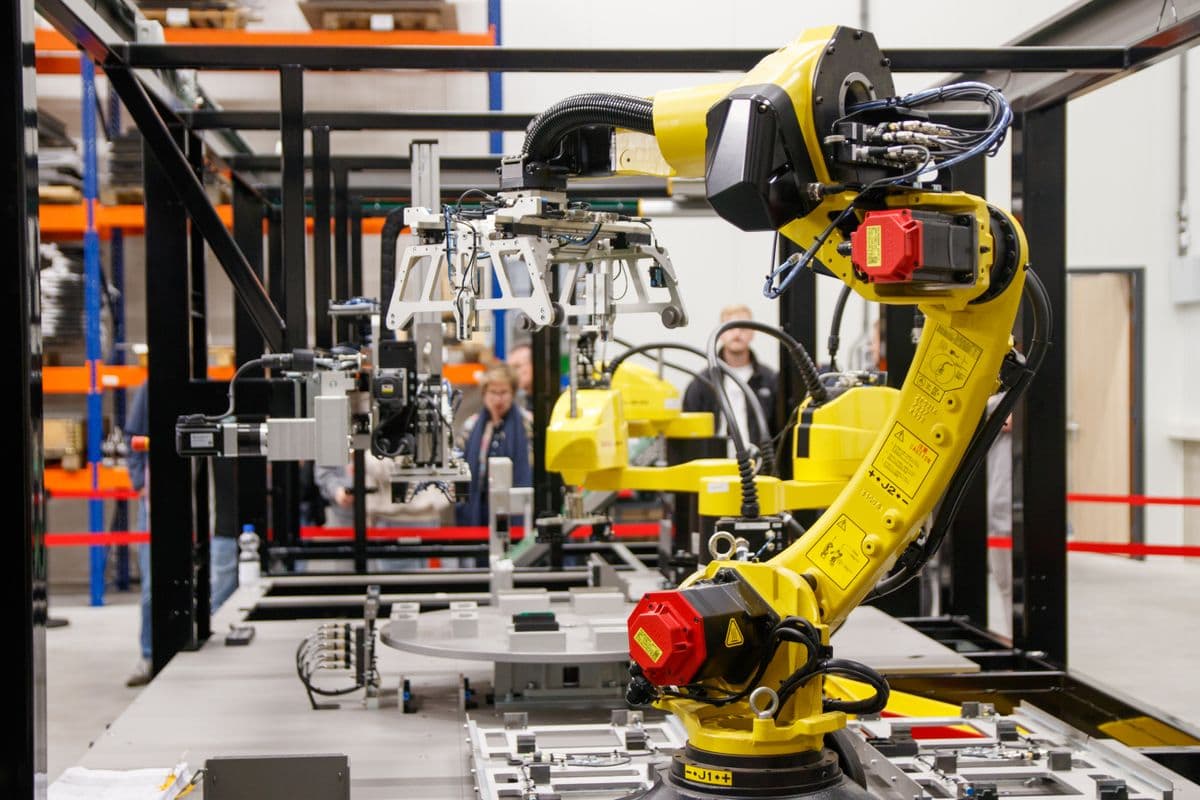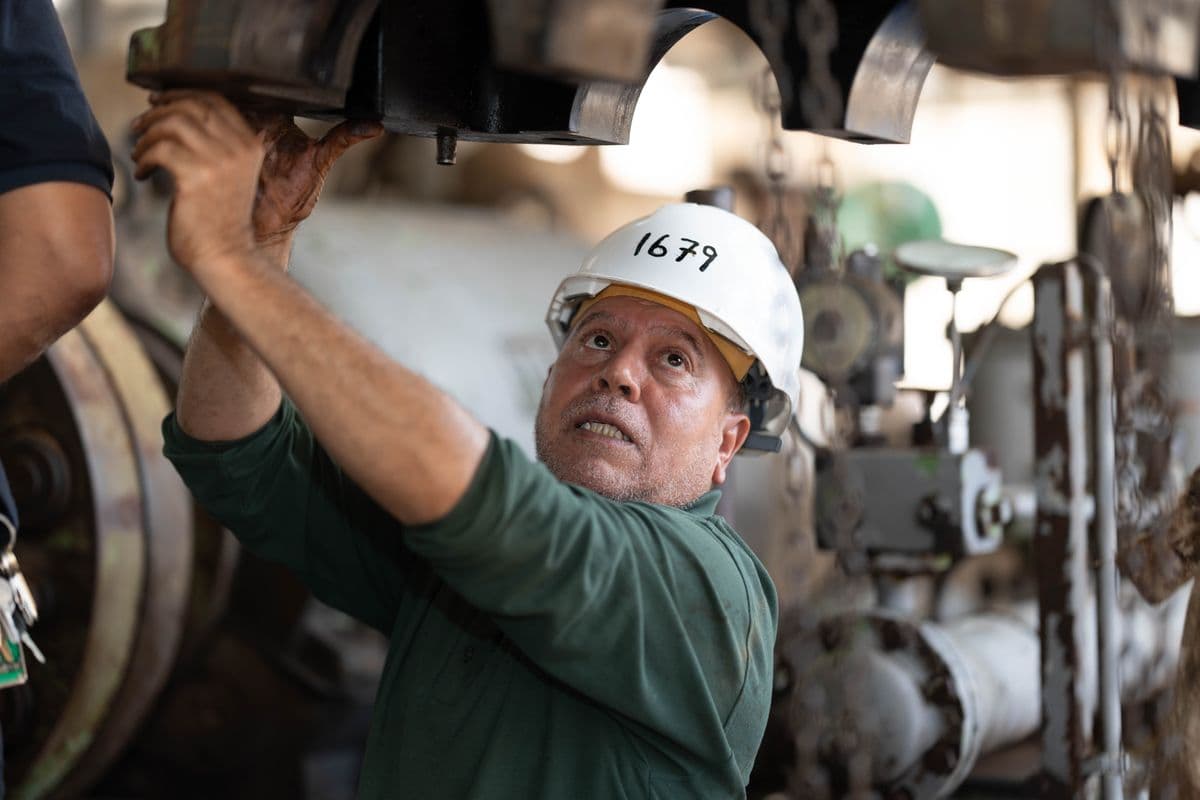
The maintenance posture that most manufacturers are still running
Most manufacturing operations in APAC run a maintenance posture that sits somewhere between reactive and time-based. Reactive means fixing equipment after it fails - the highest-cost approach, because unplanned downtime on a production line is expensive and failure often damages adjacent components beyond the initial failure point. Time-based means scheduling maintenance at fixed intervals - better than reactive, but inefficient because interval-based maintenance often services equipment that does not yet need it and misses failures that occur between scheduled intervals.
Predictive maintenance is the shift from time-based to condition-based intervention: using sensor data to assess the actual health state of equipment in real time, and scheduling maintenance when the data indicates impending failure rather than on a fixed calendar. The AI component is the system that learns what "normal" looks like for each piece of equipment and identifies early warning patterns - vibration anomalies, temperature deviations, acoustic signatures - that precede failure by enough time for a planned intervention.
The economic case is not complicated. A hydraulic press that fails unexpectedly on a Thursday afternoon takes 6-12 hours to repair with emergency parts procurement. The same press serviced on a Wednesday based on a 10-day-advance predictive alert costs 1-2 hours of planned maintenance. The difference is typically $100,000 to $400,000 in lost production plus 40-60% lower repair costs because the failure is caught before secondary component damage occurs.
This guide covers the sensor data requirements, AI model architecture, and operational integration decisions that determine whether a predictive maintenance program achieves its downtime reduction targets in production - or remains a technology demonstration running in parallel with the reactive maintenance system it was supposed to replace.
Sensor data: what to measure and on which equipment
Predictive maintenance does not require instrumenting every piece of equipment in the facility. The correct starting point is identifying the equipment where unplanned failure has the highest impact - production line bottlenecks, long-lead-time machinery, equipment without redundancy - and building sensor coverage there first. Trying to instrument everything simultaneously produces data volume without focus and typically stalls the program.
- Vibration sensors - the highest-signal data source for rotating equipment
- -Accelerometers attached to motor housings, gearboxes, pump casings, and spindle bearings capture vibration signatures that change characteristically as components degrade
- -Bearing outer-race defects, gear tooth wear, shaft imbalance, and rotor eccentricity all produce distinctive vibration frequency signatures identifiable in FFT analysis weeks before macroscopically visible failure
- -Industrial-grade accelerometers sampling at 10-20 kHz per sensor provide the frequency resolution needed for early-stage bearing defect detection
- -For rotating equipment running at variable speeds, speed-normalized vibration analysis (envelope analysis, order tracking) is required to separate speed-dependent from speed-independent anomalies
- Temperature sensors for electrical equipment and thermal processes
- -Motor winding temperature trending detects insulation degradation and cooling system deficiencies before they produce winding failure
- -Infrared thermography - periodic thermal imaging scans rather than continuous monitoring - is cost-effective for electrical switchgear, transformer hot-spot detection, and refractory lining inspection in high-temperature processes
- -Bearing temperature rise is a lagging indicator compared to vibration - it typically appears within hours of failure rather than days to weeks, making it more useful for failure confirmation than early warning
- Electrical current and power signatures
- -Motor current signature analysis (MCSA) detects rotor bar defects, bearing problems, and load imbalances through current harmonics analysis without requiring physical access to the motor
- -Power factor trending detects deteriorating insulation in motors and capacitor banks over months-to-years timescales
- -Effective for motors in hazardous environments where physical sensor access is difficult or costly
- Acoustic emission and ultrasound for high-frequency fault signatures
- -Ultrasonic sensors in the 20-100 kHz range detect lubrication deficiencies, friction-based wear, and gas or steam leaks that vibration sensors at lower frequencies miss
- -Particularly effective for slow-speed bearings (below 100 RPM) where vibration-based detection is less reliable
- -Acoustic emission sensors detect crack initiation and growth in structural components - relevant for pressure vessels, lifting equipment, and structural steel in high-stress applications
- Process signals from existing PLC and DCS systems
- -Most production facilities already collect process variables (flow rates, pressures, cycle times, energy consumption) in SCADA or historian systems that can be accessed without new sensor installation
- -Pump differential pressure trending detects impeller wear and flow restriction
- -CNC cycle time trending detects tool wear and process parameter drift on machining centers
- -Integrating historian data with new sensor data provides the most complete picture of equipment health with the lowest incremental infrastructure cost
AI models for predictive maintenance: anomaly detection versus supervised failure classification
The choice of AI model architecture for predictive maintenance depends on the availability of labeled historical failure data - and in most industrial environments, that data is limited. A manufacturing facility that has run reactive maintenance has records of failures but rarely has the sensor data time series leading up to those failures at the resolution required for model training. This data availability constraint shapes the AI architecture choice.
- Anomaly detection - the correct starting architecture for most deployments
- -Anomaly detection models (autoencoders, isolation forests, one-class SVM) learn "normal" behavior from historical sensor data during normal operations, and flag deviations from that normal without requiring labeled failure examples
- -The advantage is that only normal-state data is required for training - which is abundant - not the rare labeled failure data that most facilities do not have in usable form
- -The limitation is that anomaly detection models flag "something is different" rather than "bearing 3A has outer-race defect progressing toward failure" - the interpretation requires domain expertise
- -Alert thresholds must be tuned to acceptable false-positive rates during the first 3-6 months of deployment to avoid alert fatigue and operator distrust
- Supervised failure classification - applicable after 12-24 months of instrumented operation
- -Once an instrumented facility has accumulated sensor data through several failure events with confirmed failure type and timing, supervised models can learn to classify specific failure modes
- -Random forests, gradient-boosted trees, and LSTM networks trained on time-series features all achieve classification accuracies of 85-95% for common failure types with sufficient labeled data
- -Remaining Useful Life (RUL) regression models - predicting "how many operating hours remain before failure" - require the most labeled data of any approach but provide the most actionable maintenance scheduling output
- -Combining anomaly detection for early alerting with supervised classification for failure type identification is the most complete production architecture
- Digital twins for physics-informed prediction
- -Physics-based simulation models of equipment operating characteristics can be combined with sensor data to generate predictions grounded in physical failure mechanisms rather than purely statistical patterns
- -Particularly effective for equipment types with well-understood physics (rotating machinery, hydraulic systems, heat exchangers) where the failure mechanisms are analytically characterized
- -Reduces the sensor data volume required to achieve reliable prediction by incorporating physical constraints that statistical models must learn from data
- -Implementation complexity and cost is higher than pure data-driven approaches - justified for critical, high-cost equipment where prediction accuracy directly drives maintenance economics
The data pipeline architecture that makes predictive maintenance work in production
The AI model is 20% of the predictive maintenance problem. The remaining 80% is the data pipeline that ingests sensor data at scale, stores it in a form suitable for time-series analysis, detects anomalies in real time, and delivers actionable outputs to the maintenance system where they drive scheduling decisions. Most predictive maintenance pilots that fail in production fail because the data pipeline was designed for a demonstration, not for a production system operating at industrial scale.
- Edge data collection and preprocessing
- -Edge compute (industrial PCs or IoT gateways at the machine level) handles high-frequency sensor data acquisition and local preprocessing before transmission to the analytics platform
- -Local FFT computation, feature extraction, and anomaly pre-screening reduces bandwidth requirements by 90%+ compared to transmitting raw sensor time series to the cloud
- -Edge buffering ensures no sensor data is lost during network outages - critical for failure event capture that has training value
- -OPC-UA protocol is the industrial standard for connecting edge devices to SCADA and cloud platforms without custom integration for each equipment type
- Time-series data storage and management
- -Industrial historians (OSIsoft PI, Aveva) or purpose-built time-series databases (InfluxDB, TimescaleDB) are required for efficient storage and retrieval of high-frequency sensor data at scale
- -Standard relational databases are not suitable for sensor time-series at industrial scale - query performance degrades below useful levels once data volumes exceed weeks of multi-sensor collection
- -Data retention policy must balance storage cost against training data requirements - minimum 24 months of data retention is recommended for model retraining after equipment changes
- -Contextual data (production shift, product being run, recent maintenance events) must be stored alongside sensor data for model training - failure events without operational context are difficult to use for supervised model training
- Alert management and CMMS integration
- -Predictive maintenance alerts have operational value only when integrated into the Computerized Maintenance Management System (CMMS) where work orders are planned and tracked
- -Alert severity tiering: immediate (failure within 24-48 hours - schedule emergency maintenance), warning (failure within 1-2 weeks - schedule next maintenance window), advisory (anomaly developing - monitor closely)
- -Alert fatigue is the most common operational failure mode: systems that generate more alerts than maintenance teams can act on are routed around. False-positive rate target should be below 10% for production adoption
- -Feedback loop from maintenance technicians - confirmed failure type, severity at inspection, and time of actual failure - is essential data for model improvement and should be captured in the CMMS work order
Implementation roadmap: from sensor installation to operational impact
The implementation sequence that achieves measurable downtime reduction within 12-18 months is consistent across successful predictive maintenance programs. The most important decision is sequencing: start with the equipment where the impact is highest and the failure mechanisms are best understood, build the data collection and alert workflow, then expand.
- Phase 1: Prioritize and instrument (months 1-4)
- -Rank critical equipment by downtime impact: failure frequency times average repair duration times hourly production value gives a prioritized list
- -Install sensors on the top 5-10 highest-priority assets - enough to demonstrate value, small enough to manage data quality closely
- -Establish baseline data collection: at least 60-90 days of normal operating data before any anomaly detection model training
- -Document all maintenance events during the baseline period with failure type, time of detection, and time of repair - this retrospective data is valuable for model validation even if it predates sensor installation
- Phase 2: Anomaly detection deployment and alert workflow (months 3-8)
- -Train anomaly detection models on the baseline normal-operating data from Phase 1
- -Deploy in monitoring mode: alerts are generated and reviewed by maintenance engineers, but the maintenance schedule is not yet driven by the AI output
- -Tune alert thresholds based on the first 2-3 months of alert output to reduce false positives to a level maintenance teams will act on
- -Build the CMMS integration: alerts from the AI system generate draft work orders that maintenance planners review and approve
- Phase 3: Operational integration and expansion (months 6-18)
- -Transition from monitoring mode to operations mode: maintenance planning incorporates predictive alerts alongside time-based maintenance schedules
- -Track outcome metrics: reduction in unplanned downtime events on monitored equipment, maintenance cost per asset, ratio of planned to unplanned maintenance hours
- -Collect confirmed failure data from maintenance technicians to build the labeled dataset for supervised failure classification in Phase 4
- -Expand sensor coverage to the next priority tier of equipment, using the established data pipeline and alert workflow
DataX Power designs and deploys predictive maintenance programs for APAC manufacturers - from sensor selection and data pipeline architecture to AI model development and CMMS integration. We work with facilities at every stage of the journey, from first sensor installation to multi-site intelligent maintenance programs.
Talk to our industrial AI teamWhat successful predictive maintenance programs measure
A predictive maintenance program that does not have defined success metrics before deployment has no mechanism to demonstrate value, and no basis for making the operational decisions required to improve. These are the metrics that separate programs that survive the first year from those that get cut in the next budget cycle.
- Unplanned downtime rate (UDT): total unplanned downtime hours as a percentage of available production hours, tracked monthly per asset class and facility-wide. The primary before-after comparison metric.
- Mean Time Between Failures (MTBF): for monitored equipment, MTBF improvement indicates that predictive interventions are preventing failures that previously occurred. Target: 20-40% improvement over baseline within 18 months.
- Maintenance planned-to-unplanned ratio: percentage of total maintenance hours that are planned versus reactive. Predictive programs should shift this ratio toward planned - target 80:20 planned:unplanned for monitored assets.
- Alert precision rate: percentage of high-severity alerts that are confirmed as genuine anomalies requiring intervention when maintenance technicians inspect the flagged equipment. Below 60% precision drives alert fatigue and program abandonment.
- False negative rate (misses): confirmed failures that were not predicted - tracked by reviewing sensor data from the period preceding each unplanned failure event to identify whether an early warning signal was present but below the alert threshold.
- Cost per avoided downtime event: total program cost (sensors, software, data, labor) divided by the number of unplanned failure events prevented versus baseline. This is the metric that CFOs respond to and that justifies program expansion.